Skip to content
Kavell
Low-Code Migrate

Your low-code platform was a runway, not a destination.

Mendix, OutSystems, PowerApps, and Appian got you to 60%. Now they are the bottleneck. Kavell re-platforms you to modern React, Node, and Python — and rebuilds the workflows as AI-native systems. Not a translation. A re-architecture.

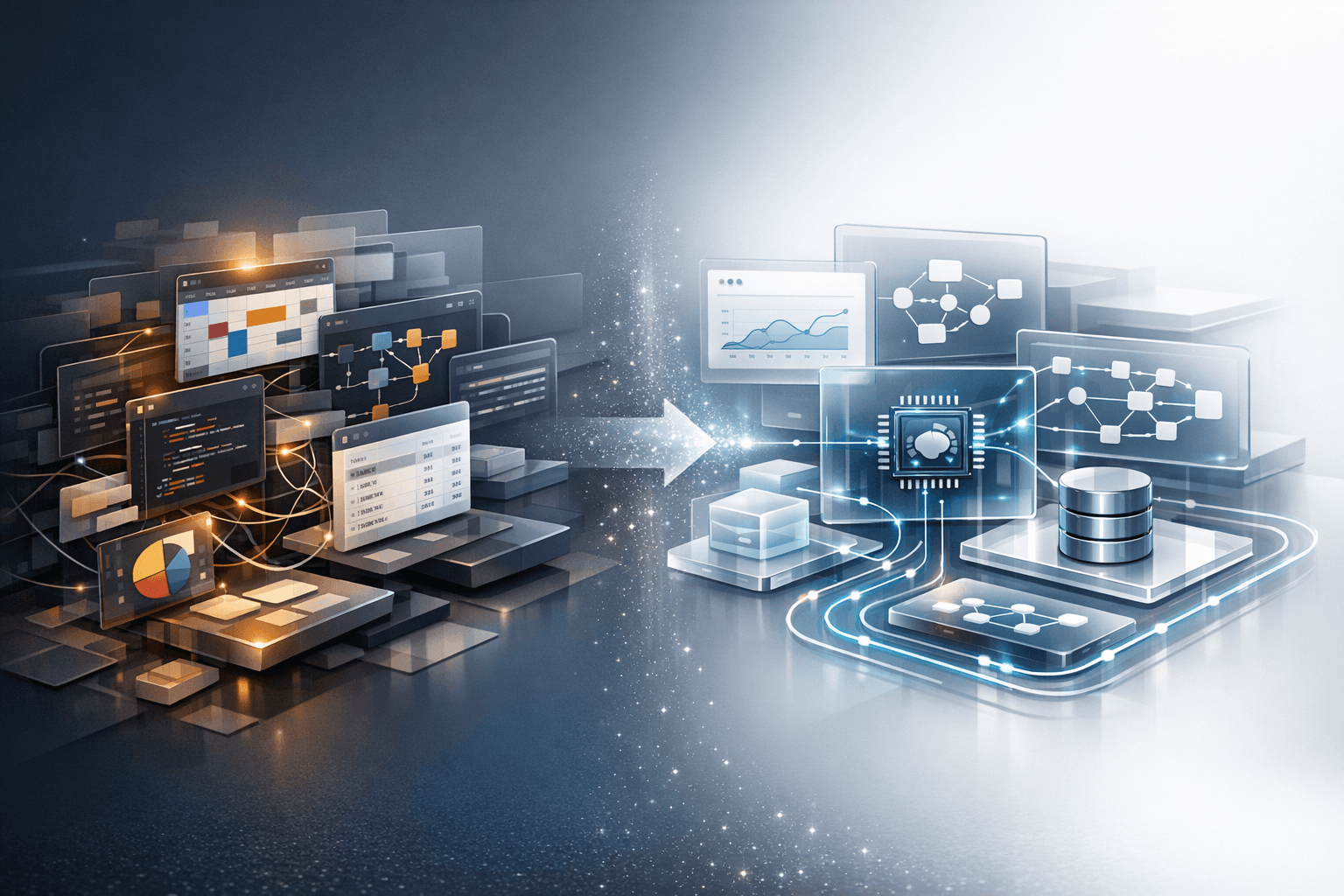
Legacy low-code application modules transforming into a modern AI-native architecture.
The low-code crisis

Three reasons teams call us.

License ceiling

Per-user and per-environment pricing scales against you. Every new module makes the next module more expensive to own.

Vendor lock-in

Proprietary runtimes, opaque upgrade paths, and forced feature retirements make migration a matter of when, not if.

No AI-native path

Low-code platforms treat AI as a bolted-on integration. The workflows you actually want — voice, document intelligence, orchestration — are second-class.

Platforms we migrate

Four platforms. One audit framework.

Mendix

Most common estate we migrate. Domain, microflows, pages, and security model all captured.
OutSystems

Server-side and client-side modules. Forge dependencies resolved.

PowerApps

Canvas and model-driven apps, Dataverse entities, Power Automate flows.

Appian

Records, sites, process models, and rules migrated with workflow re-architecture.

Approach

Audit → Pilot → Full migration → Ownership handoff.

  1. Stage 01

    Two-week audit

    Written scoping document, module-level complexity scoring, risk map, and a fixed-price proposal. Explicitly paid, because free audits correlate with failed migrations.

  2. Stage 02

    Pilot module (6–8 weeks)

    One real module, migrated end to end, with AI-native rebuild. You get working code, measured performance, and a decision point before full commitment.

  3. Stage 03

    Full migration (12–36 weeks)

    Module-by-module migration against the audit backlog. Continuous integration with your team. Weekly progress against the fixed-price plan.

  4. Stage 04

    Ownership handoff

    Your team runs the modern system. We transfer ownership with documentation, runbooks, and a 90-day support window.

Audit

Two-week scoping

Written scoping doc, complexity scoring, risk map, fixed-price proposal.

Pilot

Starts at $25K

One module end to end. Working code, measured performance, decision point.

Full migration

$75K–$500K+

Fixed-scope, fixed-price against the audit backlog. No open-ended consulting.

FAQ

Migration questions, answered directly.

The honest answers. If your question is missing, book a fit call and we will answer it live.

What do you migrate to?
A modern stack your team can own: Next.js / React on the front end, Node or Python on the back end, Postgres / Prisma for data, and AI workflows built in from day one. We do not lock you into a proprietary runtime.
Is this a 1:1 code translation?
No. 1:1 translation preserves the problems of the original low-code model. We re-architect workflows to be AI-native — document intelligence, orchestration, and voice become first-class, not bolt-ons.
What if we still need to run the low-code app during migration?
Standard. Kavell runs the new system in parallel, with synchronization in place, until each module is ready to cut over. Big-bang migrations are explicitly avoided.
Who owns the resulting code?
You do. No runtime license, no escrow, no claw-back. Fully owned and deployable on your infrastructure.
Can we pick which modules to migrate first?
Yes. The audit produces a recommended sequence based on technical risk and business criticality, but you set the final order.
Do you migrate the data?
Yes. Schema migration, data migration, and cut-over rehearsals are part of the fixed-price plan. Rollback procedures are documented for every cut-over.
How does AI-native rebuild actually change the app?
Manual data entry becomes voice or document intake. Scheduled batch jobs become durable workflows. Help-desk tickets become AI-routed requests. The app you end with is not the app you started with.

Start with the audit.

Two weeks. Fixed fee. Written deliverable. You own the output whether or not you proceed to pilot.