Carrier Voice AI
Vapi-powered outbound calls for load coverage, check-calls, and rate negotiation within guardrails. The check-call replacement is a category-defining differentiator.
Carrier voice AI replaces the check call. TMS integrations replace the spreadsheet. The same workforce engine — AI dispatching, time keeping, work orders, dispatch automation — runs for trucking fleets and port terminals alike.
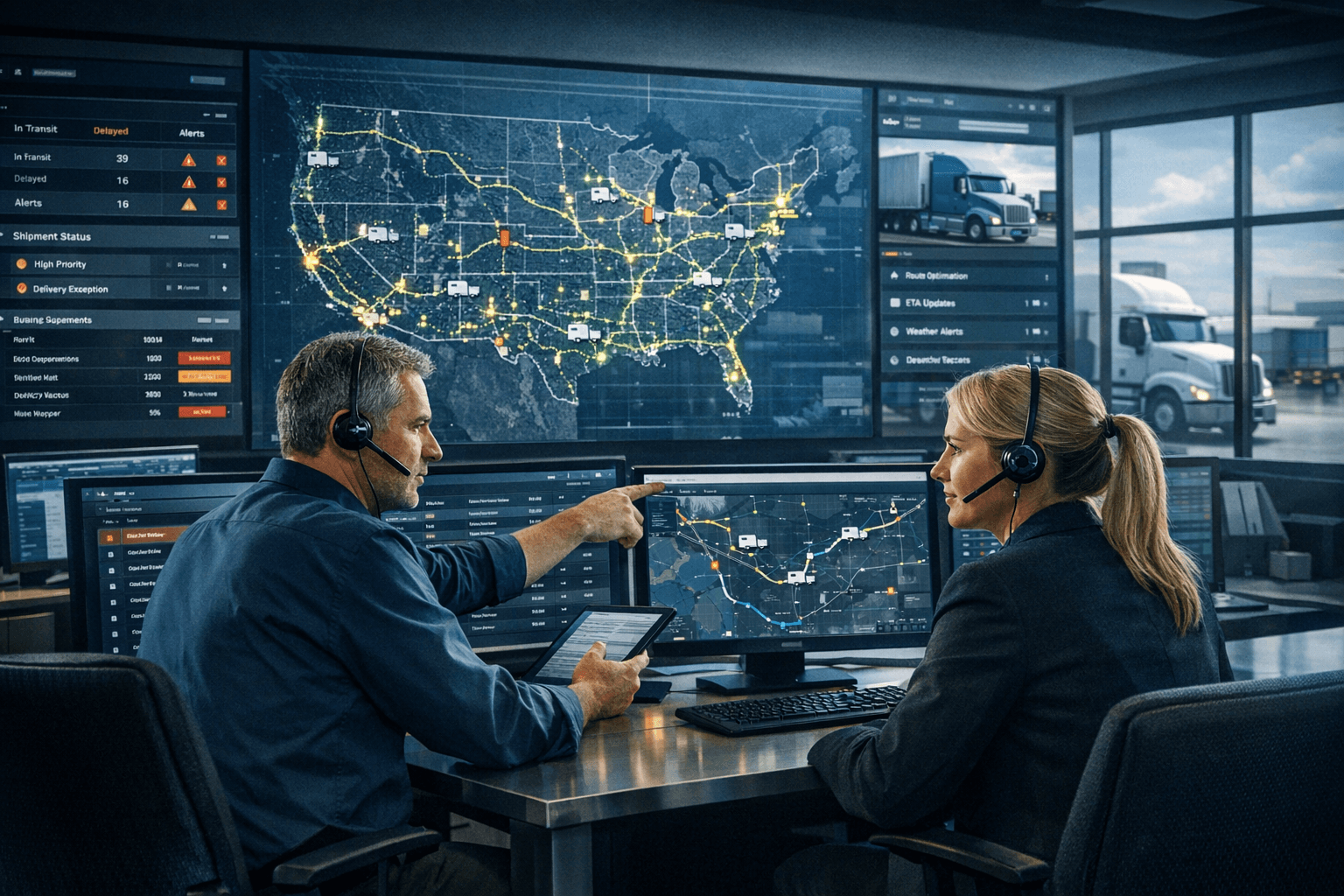
50–500 loads per day. Check calls burn night-shift hours. Rate confirmation volume is outpacing the ops team.
40–400 trucks. Dispatch, HOS, and work orders live across too many systems. Every missed appointment is a fee.
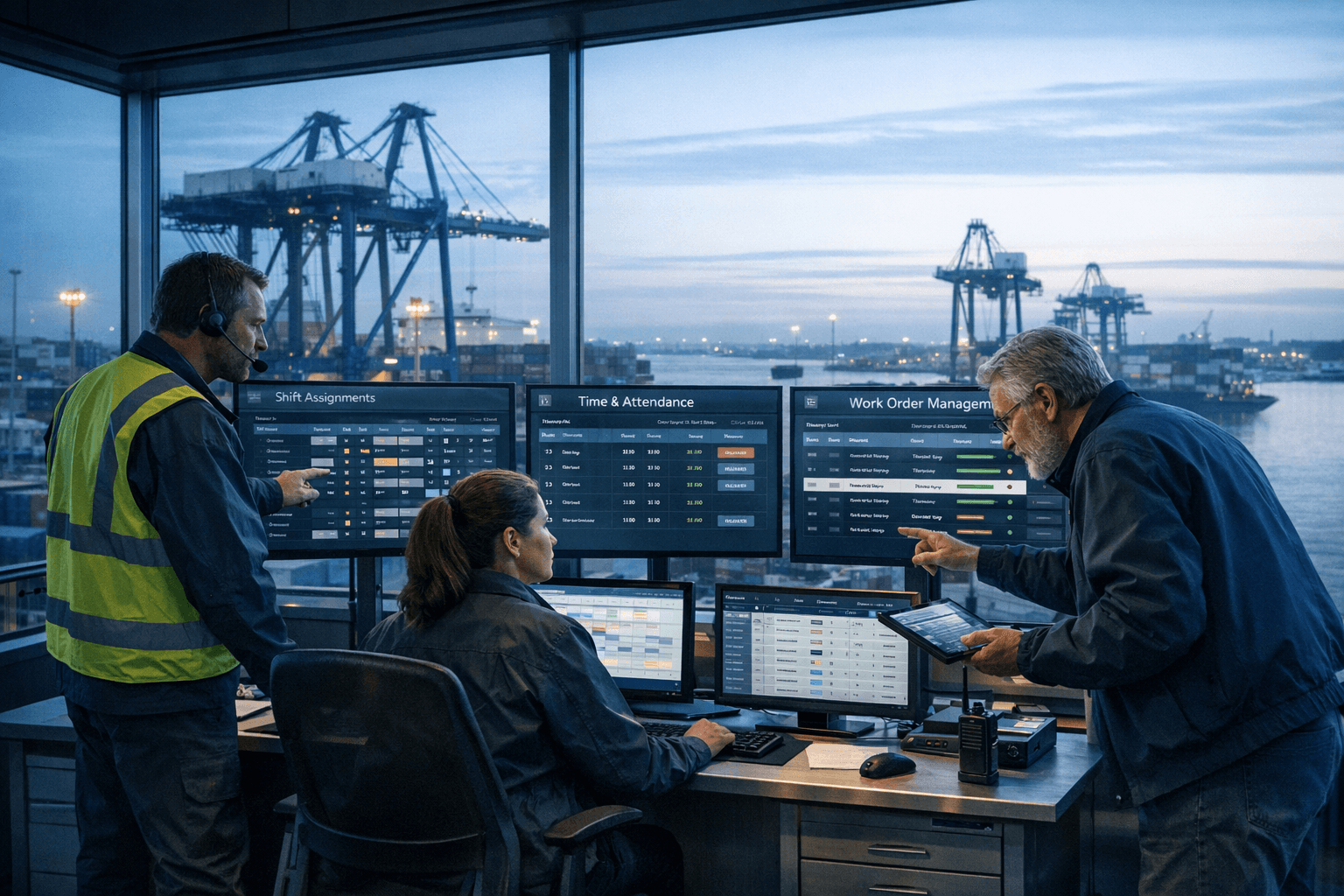
Gang scheduling, TWIC, union pay rules, and OSHA reporting running on spreadsheets and legacy applications.
Vapi-powered outbound calls for load coverage, check-calls, and rate negotiation within guardrails. The check-call replacement is a category-defining differentiator.
EDI and API integration with major TMS platforms (McLeod, Turvo, MercuryGate), exception routing, and multi-modal coverage.
Dock, terminal, and berth appointment booking with automated drayage coordination — common surface for trucking fleets and port terminals.
Invoice reconciliation, OS&D tracking, and first-draft claim packages with evidence attached.
BOL, POD, rate confirmation, work order, and port manifest parsing — feeds directly into your TMS, TOS, or dispatch board.
The workforce engine runs for trucking fleets and port terminals on the same platform. What changes is the ruleset — DOT and HOS for drivers, TWIC and ILA / ILWU for port labor.
Rules-driven automatic assignment based on configurable criteria — seniority, certifications, union rules, availability, skill tags, proximity, overtime thresholds, and fatigue limits.
Open pillarPillar 02AI-assisted clock-in validation, shift anomaly detection, missed-punch reconciliation, geofenced attendance, and grievance-defensible audit trails.
Open pillarPillar 03Multi-channel intake (email, TMS, portals, voice), AI classification, auto-assignment to dispatched crews or drivers, and completion sign-off with photo and document capture.
Open pillarPillar 04End-to-end orchestration connecting work orders → auto-dispatch → time keeping → payroll feed, so a single order flows through the entire lifecycle without re-keying.
Open pillarThe four pillars above are the same engine we deploy for port and terminal operators. TWIC credentialing, ILA / ILWU pay rules, grievance-defensible time keeping, and OSHA trail are all first-class. If you run a marine terminal or a stevedoring firm, the workforce module is configured for your environment.
Modeled auto-handled rate for carrier check-calls in a pilot with a 40-truck fleet.
Two-week scoping, 4–6 week pilot, then a 60–90 day production rollout. No multi-year big-bang programs.
Fit, scope, and integrations drive the final quote. Book a call to walk through your stack and get a written scoping proposal.
The honest answers. If your question is missing, book a fit call and we will answer it live.
A 30-minute call is enough for us to know whether Kavell fits. If it does not, we will say so.